2400 Series Radius Modular Belt
25.4 mm pitch 2400 series radius modular belt from Veybelt - food-grade material options, custom widths, fast quotation.
Side-flexing modular belts for curved and spiral conveyors - negotiate 90/180-degree turns and S-curves on a single drive to save floor space.
25.4 mm pitch 2400 series radius modular belt from Veybelt - food-grade material options, custom widths, fast quotation.
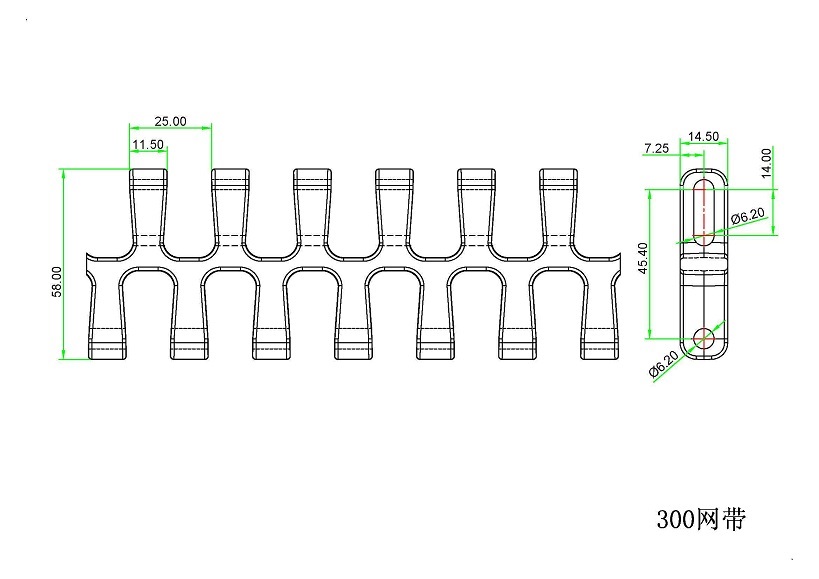
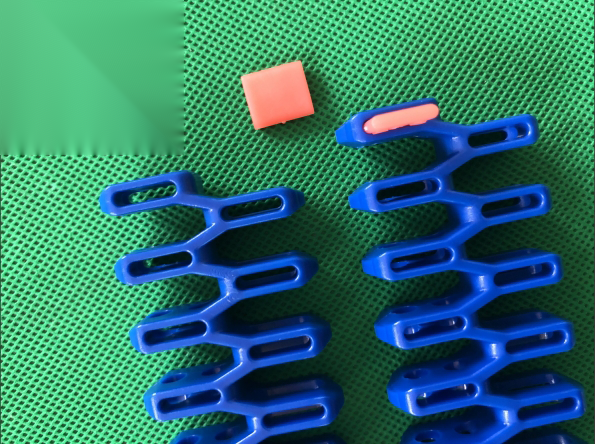
46 mm pitch 300 series radius modular belt from Veybelt - food-grade material options, custom widths, fast quotation.
25.4 mm pitch 7100 series radius modular belt from Veybelt - food-grade material options, custom widths, fast quotation.
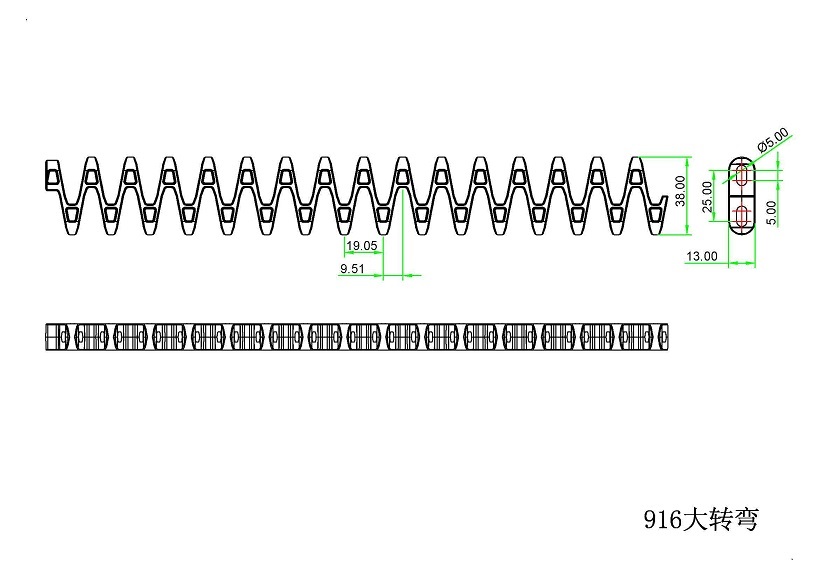
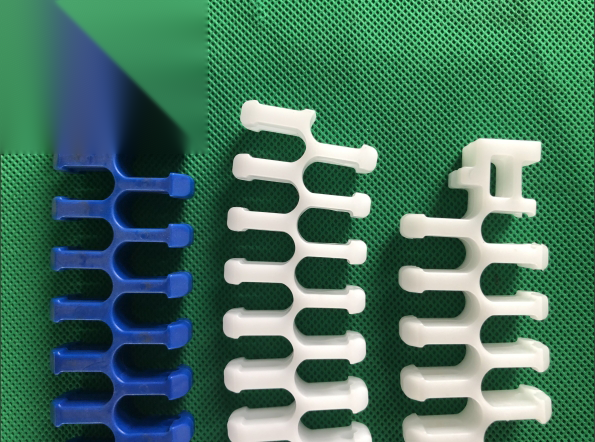
25.4 mm pitch 916 series large radius modular belt from Veybelt - food-grade material options, custom widths, fast quotation.
These are two different jobs and they need different products. A radius belt turns flat, inside one level: slotted rod holes let the inner edge of the belt collapse so the belt fans round a bend. A spiral system climbs while it turns, wrapping a driven drum, and it is built as a system rather than as a belt you drop into an existing frame. Getting this fork right first saves a wasted enquiry.
| Series | Pitch | Inner turning radius | Open area | Belt strength |
|---|---|---|---|---|
| 916 | 25.4 mm | 1.7 x belt width | 60% | 14,200 N/m PP, 14,700 N/m POM |
| 7100 | 25.4 mm | 2.3 x belt width | 44.2% | 24,200 N/m PP, 30,900 N/m POM |
| 2400 | 25.4 mm | 2.5 x belt width | 44.2% | 17,000 N/m PP, 31,800 N/m POM |
| 300 | 46 mm | 2.5 x belt width | 41.5% | 18,200 N/m PP |
Read the third column as floor space. Inner turning radius is expressed as a multiple of belt width, so a 600 mm belt at 1.7 needs about 1,020 mm of inner radius and the same belt at 2.5 needs 1,500 mm. The 916 turns tightest and has the most open surface, and it carries the least. The 7100 is the strong one that still turns reasonably tight. Choose the radius your layout can actually give, then take the strongest belt that fits it.
A spiral tower for freezing, proofing or cooling is a different build. The spiral conveyor chain plate is the component for that duty. A radius belt cannot be substituted for it, whatever the pitch says. The engineering difference is set out in spiral against radius.
Belt width, the inner radius your frame gives, the turn angle, what the belt carries and the line speed. If the conveyor already exists, the inner radius is the number to measure first, because it rules series in or out before anything else.
Yes. A radius belt runs straight and turns, which is why a single belt can carry a product through an S bend without a transfer. It costs strength and it costs floor space compared with a straight running belt, so use it where the layout needs the turn.
Then no belt in this range fits it, and the honest answer is to change the layout or split the run with a transfer. Forcing a belt below its rated inner radius pulls the inside edge and the belt will not last.